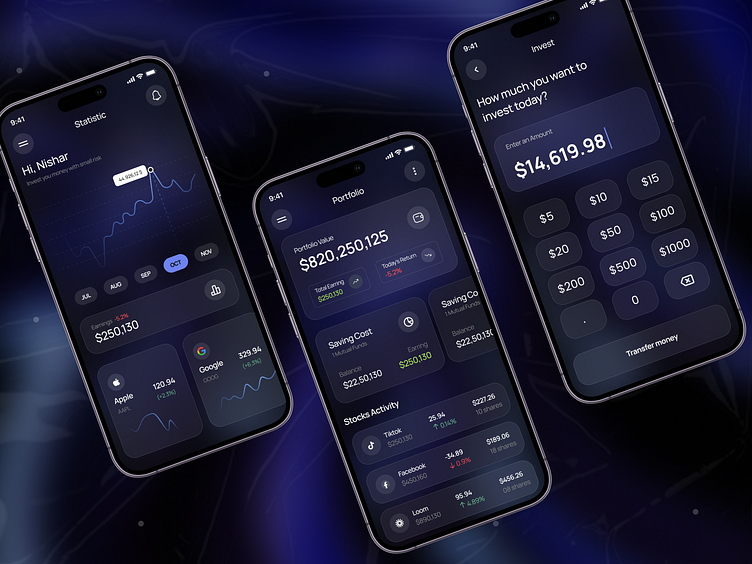
Top 10 Tips To Evaluate The User Experience And Interface Of Ai Stock Trading Platforms
The User Interface (UI) and the User Experience (UX) of AI stock predicting/analyzing trading platforms play a critical role in ensuring efficiency, usability as well as overall satisfaction. An undesigned interface can affect your decision-making process even if you've got robust AI models. Here are ten top suggestions to evaluate the user interface on these platforms.
1. Evaluation of the intuitiveness and ease of use
Navigation: Make sure the platform is easy to use, with buttons and menus that are easy to grasp as well as workflows.
Learning curve: Identify how quickly users new to the platform can learn and operate the platform with no any extensive training.
Make sure that there is the same designs across different platforms (e.g. button styles, color schemes).
2. Check Customizability
Dashboard customization: Determine if users can personalize dashboards to display relevant information such as charts, metrics, and charts.
Layout flexibility is crucial: Make sure you can alter the arrangement and size of charts, widgets, and tables.
Themes and preferences: Check if the platform offers dark/light styles or other options for visuals.
3. Visualize the data with the Assess Tool
Chart quality: Make sure the site provides interactive charts with high quality (e.g. candlestick charts lines charts, etc.)) with zoom and pan functions.
Visual clarity: Verify that the information is clearly displayed, including correct labels and legends, tooltips and more.
Real-time updates: Check if the visualizations are being updated in real-time to reflect any changes in the market.
4. Test Speed and Response
Loading Times: Make sure that your platform is loaded quickly regardless of whether you are dealing with large data sets.
Performance in real-time: Verify that the platform is capable of handling data feeds in real time without any lag or delay.
Cross-device Compatibility: Verify whether the application works with various gadgets (desktops or smartphones).
5. Examine Accessibility
Mobile app: Find out whether there's a complete mobile application that allows trading on the go.
Keyboard Shortcuts: Ensure that your device supports keyboard shortcuts.
Accessibility features – Make sure that the application is in compliance with accessibility standards.
6. Review the search and filtering functionality
Search efficiency: Ensure the platform lets users swiftly look up the indices, stocks or any other asset.
Advanced filters: Determine if the user can apply filters to achieve specific results (e.g. by sector, capitalization, performance metrics).
Saved searches: Check whether you are able to save searches and filters that are frequently used.
7. Be sure to check for alerts and notifications
Customizable Alerts: Users can create alerts based on certain situations, such as price thresholds or spikes in volume and news events.
Delivery of notifications: Check whether alerts are delivered via different channels (e.g. email, SMS and app notifications).
Make sure to check the alerts' timeliness and accuracy.
8. Integrate with other tools
Integrating brokers is essential to ensure a smooth execution of trades.
API access: Determine whether the platform allows API access to advanced users to develop custom workflows or tools.
Third-party Integrations: Ensure the compatibility of your platform with any other software (e.g. Excel, Google Sheets and trading bots).
9. Review Support and Help Features
Take a look at the onboarding instructions.
Help center – Make sure that the platform includes a complete support center or knowledge base.
Customer support: Check whether the platform has an efficient customer support (e.g. live chat, email, phone).
10. Test to determine if Overall User Satisfaction is met
Feedback from users: Read research reviews and feedback to determine general satisfaction of users with the platform's UX/UI.
Trial period: You can use a demo or free trial to try the platform and test its usability.
How does the platform handle edges and errors?
Bonus Tips
Aesthetics: While functionality is key visual appeal, an appealing design can enhance the overall user experience.
Performance under stress: Ensure that the platform is stable and responsive under conditions of extreme market volatility.
Go to the community or forums to determine if there's a user group where users can discuss tips and provide feedback.
By following these tips to evaluate the UI/UX of AI trading platforms for stock prediction or analysis, ensuring they are easy to use, efficient and aligned with your trading needs. A well-designed UI/UX improves your ability make informed decisions and also perform trades effectively. Check out the recommended additional info about best ai stock to buy for site info including stocks for ai, trading investment, ai intelligence stocks, publicly traded ai companies, buy stocks, stock investment, stock market, stock analysis websites, stock investment, technical analysis and more.

Top 10 Tips For Evaluating The Risk Management Of Ai Stock Forecasting/Analyzing Trading Platforms
A trading platform that uses AI to forecast or analyze stocks must have a solid risk management system. This can protect your capital investment and limit any losses that could occur. Platforms that are equipped with powerful risk-management tools can help you navigate volatile market conditions and make educated decisions. Here are the top ten tips to assess the risk management capabilities of these platforms:
1. Review of Take-Profit and Stop-Loss Features
Customizable Levels: Ensure that the platform allows you to create individual stop-loss limits and goals for taking profits in your trading strategies or trades.
Trailing stops: Find out if the platform you are using supports trailing stop that automatically adjust when the market moves in your favor.
You should check if there are any stop-loss strategies that assure that your position will be closed at the agreed price, regardless of whether markets fluctuate.
2. Calculate Position Size Tools
Fixed amount – Make sure that you know the amount of your positions according to a set amount.
Percentage of Portfolio: Decide if it is possible to set the position size as a percent of your portfolio total to control risk proportionally.
Risk-reward: Check if your platform lets you determine risk-rewards for each trade or strategy.
3. Make sure you are using Diversification Assistance
Multi-asset trading. Make sure your platform is compatible with different asset classes like ETFs and Forex, Options, and Stocks.
Sector allocation: Find out if your platform has tools for monitoring and managing sector exposure.
Diversification of geographical risk: Find out if the trading platform allows international markets to spread risk across different geographical areas.
4. Evaluating margin and leverage controls
Margin requirements: Ensure the platform clearly outlines any margin requirements for trading leveraged.
Be sure to check for limitations on leverage. You can use this feature to control your risk exposure.
Margin call notifications: Make sure that the platform provides timely margin call notifications to prevent account liquidation.
5. Assessment and reporting of risk
Risk metrics: Ensure that the platform offers the most important risk metrics for your portfolio (e.g. Value at Risk (VaR) Sharpe ratio, and drawdown).
Scenario Analysis: Check whether your platform has the capability of generating different market scenarios to assess possible risks.
Performance reports: Check whether the platform offers complete performance reports, including the risk-adjusted return.
6. Check for Real-Time Risk Monitoring
Monitoring of your portfolio. Make sure that your platform is able to monitor the risk in real-time of your portfolio.
Alerts and notifications. Find out if the platform can provide real-time notification of risk-related events.
Review the risk dashboards. If you want to get a full picture of your risks, be sure that they're configurable.
7. Conduct a Stress Test and backtest
Stress testing: Ensure the platform allows you to stress test your strategies or portfolio under the most extreme market conditions.
Backtesting: Make sure that the platform allows backtesting strategies based on past data in order to evaluate risk and performance.
Monte Carlo simulators: Verify that the platform uses Monte Carlo to simulate a variety of possible outcomes in order for you to evaluate the risk.
8. Risk Management Regulations Compliance Assessment
Compliance with Regulations: Check the compliance of the platform with applicable Risk Management Regulations (e.g. MiFID II for Europe, Reg T for the U.S.).
Best execution: Check if the platform adheres the best execution practice, which ensures trades are executed at the best price so as to limit any loss.
Transparency: See if the platform provides clear and transparent disclosures about risks.
9. Check for User Controlled Risk Parameters
Custom risk management rules: Ensure the platform you select allows you to create customized risk management rules.
Automated risk controls You should check whether your platform is able to apply risk management rules automatically on parameters you have established.
Verify if the platform allows manual overrides to automated risk controls.
Review Case Studies, User Feedback, and Case Studies
User reviews: Read user feedback and assess the effectiveness of the platform in the management of risk.
Case studies and testimonials They will showcase the capabilities of the platform for managing risk.
Forums for community members: Find out if there's an active community of traders that share advice and strategies for managing risk.
Bonus Tips:
Free Trial: Try out the features of the platform for risk management in real situations.
Customer support: Ensure the platform provides a solid support in relation to risk management concerns or questions.
Educational resources: Find out whether there are any educational resources on best practices in risk management.
These guidelines will allow you to assess the risk management abilities of AI stock-predicting/analyzing trading platforms. So you'll be able pick a platform that safeguards your investment and reduces the risk of losses. Robust risk management tools are crucial to navigate volatile markets and achieving long-term trading success. See the top rated inciteai.com AI stock app for more info including ai stock analysis, invest ai, ai stock prediction, best ai trading platform, ai stock prediction, how to use ai for stock trading, ai stock predictions, chart ai trading, best ai penny stocks, ai software stocks and more.